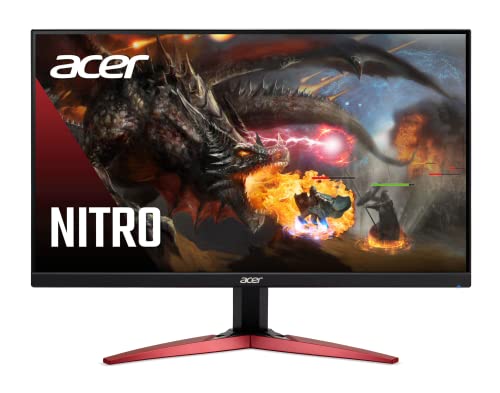
The 1500R curve is the defining layout choice here, and it matters most when the monitor sits close on a desk. It helps the screen feel more wrapped around your field of view, which suits work, browsing, and relaxed gaming better than a flat panel of the same size.That same shape also changes the buying decision. If you want a monitor that feels more immersive without moving into ultrawide territory, this is the right kind of compromise. If you need perfectly neutral geometry for color work or layout-sensitive tasks, a curved 27-inch 1080p panel is less attractive.120Hz With Adaptive SyncThe 120Hz refresh rate, 1ms MPRT response time, and Adaptive Sync support give this monitor a clear motion advantage over basic office displays. Scrolling feels cleaner, and fast camera movement in games lands in a more comfortable range for everyday play.The practical upside is smoother use across both work and entertainment. The limitation is that the panel still stays in Full HD territory, so the value here is motion fluidity, not extra desktop detail.USB-C, HDMI, and Built-In SpeakersThe connection set is practical rather than flashy: one USB Type-C port, one HDMI 1.4 port, and two built-in 2W speakers. That combination makes it easy to connect a laptop or desktop and keep the desk simpler.This is especially useful for a compact home office or a shared desk. The speakers are fine for system sounds, calls, and casual viewing, but they are not the reason to buy the monitor. They help with convenience more than with sound quality.Ergonomics and MountingThe monitor includes -5° to 15° tilt, 178° wide viewing angles, an ultra-thin bezel, anti-glare treatment, low blue light, anti-flicker, and 100 x 100 mm VESA support. Those are the practical comforts that matter once the screen is actually on the desk.The tilt range is modest, but it is enough for a normal seated setup, and VESA compatibility gives buyers a better long-term path if the included stand does not suit the desk. That makes the monitor easier to live with than a fixed, no-frills budget screen.User experienceOn a laptop desk, the first thing this monitor gives you is breathing room. A 27-inch 16:9 screen at 1080p is large enough for side-by-side documents, browser tabs, and messaging, but the pixel density sits around 82 PPI, so close-up text work has a softer edge than a 27-inch 1440p display. That makes it a better fit for mixed office and entertainment use than for anyone who spends all day staring at tiny fonts.For motion-heavy use, the 120Hz refresh rate and 1ms MPRT rating put it in the comfortable budget gaming range. That is enough to make scrolling, window movement, and casual gaming feel more fluid than a standard 60Hz office panel. The trade-off is that this is still a Full HD monitor, so the motion benefit is paired with a resolution level that favors smoothness and value over extra detail.Setup is straightforward in the way buyers want a desk monitor to be straightforward. USB Type-C and HDMI cover the common connection paths, and the VESA mount support gives it a real route to a cleaner arm-mounted setup. Built-in speakers also reduce cable clutter, but the 2W-per-speaker class keeps them in the “daily use” category rather than the “replace a real audio setup” category.ComparisonAgainst the Acer Nitro KG241Y Sbiip, this SANSUI gives you a larger 27-inch canvas, a curved shape, USB-C, and built-in speakers, while the Acer route is the smaller 23.8-inch choice with a 165Hz VA panel. Pick the Acer if you want a more gaming-forward compact screen; pick the SANSUI if desk size, connection simplicity, and a bigger everyday workspace matter more.Against the Amazon Basics 27E2UA, the SANSUI is the more motion-oriented option with 120Hz, curvature, USB-C, and speakers, while the Amazon Basics model is the simpler 27-inch IPS flat-panel office route at 75Hz. Choose the Amazon Basics if you want a plain productivity monitor; choose this SANSUI if you want a more immersive, more flexible desk screen that still stays affordable.Compared with the Samsung LS27D366GANXZA, the SANSUI pushes harder on convenience with USB-C and built-in speakers, while the Samsung route is the cleaner curved 27-inch alternative at 100Hz. The Samsung is the safer pick if you want a more established mainstream monitor path; the SANSUI makes more sense if you want the extra ports and audio convenience in one package.
Key featuresCurved 27-Inch Desk ShapeThe 1500R curve is the defining layout choice here, and it matters most when the monitor sits close on a desk. It helps the screen feel more wrapped around your field of view, which suits work, browsing, and relaxed gaming better than a flat panel of the same size.That same shape also changes the buying decision. If you want a monitor that feels more immersive without moving into ultrawide territory, this is the right kind of compromise. If you need perfectly neutral geometry for color work or layout-sensitive tasks, a curved 27-inch 1080p panel is less attractive.120Hz With Adaptive SyncThe 120Hz refresh rate, 1ms MPRT response time, and Adaptive Sync support give this monitor a clear motion advantage over basic office displays. Scrolling feels cleaner, and fast camera movement in games lands in a more comfortable range for everyday play.The practical upside is smoother use across both work and entertainment. The limitation is that the panel still stays in Full HD territory, so the value here is motion fluidity, not extra desktop detail.USB-C, HDMI, and Built-In SpeakersThe connection set is practical rather than flashy: one USB Type-C port, one HDMI 1.4 port, and two built-in 2W speakers. That combination makes it easy to connect a laptop or desktop and keep the desk simpler.This is especially useful for a compact home office or a shared desk. The speakers are fine for system sounds, calls, and casual viewing, but they are not the reason to buy the monitor. They help with convenience more than with sound quality.Ergonomics and MountingThe monitor includes -5° to 15° tilt, 178° wide viewing angles, an ultra-thin bezel, anti-glare treatment, low blue light, anti-flicker, and 100 x 100 mm VESA support. Those are the practical comforts that matter once the screen is actually on the desk.The tilt range is modest, but it is enough for a normal seated setup, and VESA compatibility gives buyers a better long-term path if the included stand does not suit the desk. That makes the monitor easier to live with than a fixed, no-frills budget screen.User experienceOn a laptop desk, the first thing this monitor gives you is breathing room. A 27-inch 16:9 screen at 1080p is large enough for side-by-side documents, browser tabs, and messaging, but the pixel density sits around 82 PPI, so close-up text work has a softer edge than a 27-inch 1440p display. That makes it a better fit for mixed office and entertainment use than for anyone who spends all day staring at tiny fonts.For motion-heavy use, the 120Hz refresh rate and 1ms MPRT rating put it in the comfortable budget gaming range. That is enough to make scrolling, window movement, and casual gaming feel more fluid than a standard 60Hz office panel. The trade-off is that this is still a Full HD monitor, so the motion benefit is paired with a resolution level that favors smoothness and value over extra detail.Setup is straightforward in the way buyers want a desk monitor to be straightforward. USB Type-C and HDMI cover the common connection paths, and the VESA mount support gives it a real route to a cleaner arm-mounted setup. Built-in speakers also reduce cable clutter, but the 2W-per-speaker class keeps them in the “daily use” category rather than the “replace a real audio setup” category.ComparisonAgainst the Acer Nitro KG241Y Sbiip, this SANSUI gives you a larger 27-inch canvas, a curved shape, USB-C, and built-in speakers, while the Acer route is the smaller 23.8-inch choice with a 165Hz VA panel. Pick the Acer if you want a more gaming-forward compact screen; pick the SANSUI if desk size, connection simplicity, and a bigger everyday workspace matter more.Against the Amazon Basics 27E2UA, the SANSUI is the more motion-oriented option with 120Hz, curvature, USB-C, and speakers, while the Amazon Basics model is the simpler 27-inch IPS flat-panel office route at 75Hz. Choose the Amazon Basics if you want a plain productivity monitor; choose this SANSUI if you want a more immersive, more flexible desk screen that still stays affordable.Compared with the Samsung LS27D366GANXZA, the SANSUI pushes harder on convenience with USB-C and built-in speakers, while the Samsung route is the cleaner curved 27-inch alternative at 100Hz. The Samsung is the safer pick if you want a more established mainstream monitor path; the SANSUI makes more sense if you want the extra ports and audio convenience in one package.