
Price
$25-$75
Price
The TP-Link Archer A54 is a sensible pick for a small home that needs dependable Wi-Fi without paying for features it will never use. Its appeal is straightforward: dual-band coverage, EasyMesh support, WPA3 security, and a simple setup path for everyday browsing, streaming, and light device loads. The main trade-off is just as clear, though. This is a Fast Ethernet router, so it fits best when your internet line and wired devices do not demand gigabit-class throughput.
Buy it if you want an inexpensive home router that is easy to live with, covers a modest space, and can be folded into a mesh later. Skip it if your priority is high-speed wired networking or a router that needs to anchor a more demanding multi-gig setup. For that kind of buyer, the four 10/100 Mbps ports are the limiting factor, not the Wi-Fi feature list.
| Wi-Fi standard | 802.11a, 802.11ac, 802.11b, 802.11g, 802.11n |
|---|---|
| Wireless speed | 5 GHz up to 867 Mbps and 2.4 GHz up to 300 Mbps |
| Ports | 4 x 10/100 Mbps Fast Ethernet ports |
| Mesh support | EasyMesh compatible |
| Security | WPA3 |
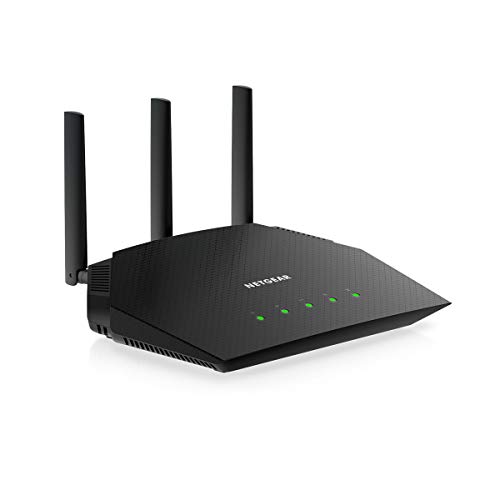
| Antennas | Four external antennas |
The router is built around a simple start, with the included cable, quick installation guide, and TP-Link Tether app making firmware updates and basic management easy to handle.
That matters because this is the kind of router many buyers want to install once and forget. The low-friction setup is a real strength for a home network, but the management experience is aimed at routine control rather than deep customization.
The A54 runs dual-band Wi-Fi with 5 GHz up to 867 Mbps and 2.4 GHz up to 300 Mbps, and the product positioning calls out coverage up to 1,000 sq. ft. with four external antennas.
That combination fits ordinary household traffic well: streaming, browsing, smart TVs, and phones. The catch is that the faster band is still sensitive to walls and distance, so the best results come in a normal home layout rather than a challenging one.
EasyMesh compatibility and Access Point Mode give the router more than one way to fit into a home network. It can stand alone, join a mesh later, or turn a wired connection into wireless coverage.
That flexibility matters because it keeps the purchase from being a dead end. If your setup changes later, the A54 can still play a useful role, though the underlying Fast Ethernet ports keep it out of the serious backhaul conversation.
In a typical apartment or small house, the Archer A54 makes the first setup pass feel low-drama. The included Ethernet cable, quick guide, and TP-Link Tether app give it a very direct start, and that matches the recurring theme here: plug it in, set the password, and get on with the day. The practical upside is less time spent wrestling with the router and more time using it. The practical limit is that the experience is built for convenience, not for chasing top-end throughput.
For a family room, bedroom, and garage-style coverage check, the four external antennas and claimed 1,000 sq. ft. reach line up with the kind of whole-home use this router is trying to solve. That is enough to make it a credible fit for a modest home where the goal is stable signal in the usual places, not flawless coverage through dense walls or a large floor plan. The trade-off is that range and speed are tied to environment, and the 2.4 GHz band is still the fallback for reach rather than raw speed.
The wired side is where the decision gets sharper. Four Fast Ethernet ports are fine for a printer, TV box, or a basic desktop, but they are not the right foundation for a faster internet plan or a network that depends on gigabit backhaul. If your home setup is mostly wireless and your wired needs are light, that limitation stays out of the way. If you expect the router to be the center of a faster wired network, this is the point where the A54 stops looking like a bargain and starts looking like a compromise.
Community
The pattern is simple: people who want an affordable, easy router for everyday home use tend to be pleased, while buyers expecting stronger wired speed or more advanced network behavior are the ones most likely to run into frustration. The useful lesson is that the A54 is easiest to like when it is treated as a practical home router, not a speed-first centerpiece.
I expected a hassle, but setup went smoothly and the network was updated fast.
It is much better than my Spectrum router, and I do not get lagging or buffering.
Setup is frictionless, and the range covers my whole apartment, but the top speed is not close to the claim.
I could not get it configured, and the settings page kept failing when I tried to save changes.
| Attribute | TP-Link Archer A54 Current | TP-Link Archer AX21 | TP-Link Archer AX55 | TP-Link Archer AXE75 |
|---|---|---|---|---|
| Price | $28.97 | $47.95 | $74.99 | $99.97 |
| Ports | 4 x 10/100 Mbps Fast Ethernet ports | Gigabit Ethernet | Ethernet, USB, Wi-Fi | - |
| Wi-Fi standard | 802.11a, 802.11ac, 802.11b, 802.11g, 802.11n | 802.11ax | 802.11ac, 802.11ax, 802.11b, 802.11g, 802.11n | 802.11ax |
| Mesh support | EasyMesh compatible | Easy Mesh | - | OneMesh Supported |
| Security | WPA3 | Works with Alexa and CISA Secure-by-Design pledge | HomeShield with Basic Network Security, IoT Device Identification, Basic Parental Controls, QoS, and Basic Weekly/Monthly Reports | WPA3 Security |
| Antennas | Four external antennas | - | 4 high-gain external antennas | - |
| Editorial score | 77/100 | 79/100 | 82/100 | 79/100 |
Compared with a typical gigabit home router like TP-Link’s own AX55 class, the Archer A54 is the cheaper, simpler route for basic household coverage. Choose the A54 if your goal is to get stable Wi-Fi into a smaller home without paying for faster wired hardware you will not use. Choose the gigabit-class alternative if your internet plan, desktop, or streaming box benefits from stronger wired headroom.
Against mesh-first systems such as eero, the A54 makes sense when you want one low-cost router now and maybe a mesh step later. It gives you EasyMesh compatibility, but it is not the same as buying a full multi-node system from day one. If seamless whole-home coverage across a larger space is the real priority, the mesh route is the cleaner choice; if your network is modest and price discipline matters more, the A54 is the sharper buy.
Compare with
Add a second model to activate the direct comparison.





No products match that filter combination.
The Archer A54 is a good buy when the job is simple Wi-Fi for a small home, with WPA3, EasyMesh support, and easy setup doing most of the heavy lifting. It earns its place by solving the everyday problem cleanly, and it does so at a level that makes the current offer worth checking if you are trying to keep costs down.
Do not choose it as the center of a faster wired network or a larger, more demanding house. The Fast Ethernet ports are the main ceiling, and that trade-off is what separates a smart budget router from a more future-proof one.
Yes. It is best suited to modest home coverage, everyday streaming, browsing, and light wired use.
Yes. Access Point Mode lets it turn a wired connection into wireless coverage.