Review Routers TP-Link

TP-Link Archer BE230 Router - Review and opinions

TP-Link Archer BE230
79 /100 Overall

Quick recommendation

Value for money 83/100
Ease of use 80/100
Durability 68/100
Customer reviews 86/100

Is it worth it?

The Archer BE230 is a strong fit for a home that wants a real step up from an older router without jumping into a pricier tri-band setup. It brings Wi-Fi 7, dual 2.5G ports, three 1G LAN ports, USB 3.0, and a quad-core CPU into a compact black chassis, so the appeal is clear for families, streamers, and anyone with a wired desktop or console nearby. The main trade-off is just as clear: this is a dual-band router, so it is built for practical speed and capacity rather than the extra headroom of 6 GHz.

Buy it if your priority is easier setup, better whole-home coverage, and a sensible multi-gig path for a typical household. Skip it if you want the full Wi-Fi 7 feature set with 6 GHz, or if your network plan depends on the absolute cleanest high-end wireless route. For most homes, though, the BE230 lands in a useful middle ground where the ports, mesh support, and security tools matter more than headline chasing.

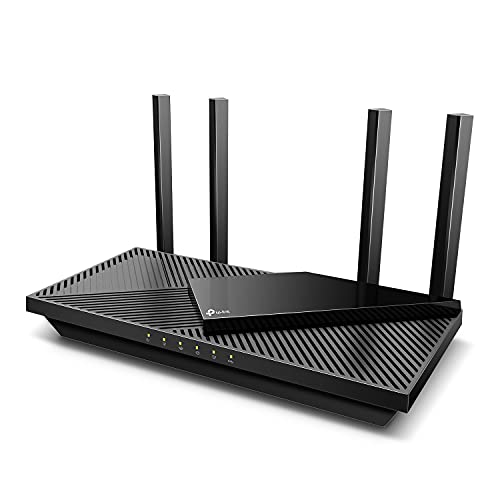
Wi-Fi standard Wi-Fi 7 (802.11be)
Wireless speed up to 2882 Mbps on 5 GHz and 688 Mbps on 2.4 GHz
Ports 1 2.5G WAN/LAN port, 1 2.5 Gbps LAN port, 3 1 Gbps LAN ports
Mesh support EasyMesh compatible
Security HomeShield with parental controls and real-time IoT security
Antennas 4 internal antennas

Key features

Wi-Fi 7 for the home

The BE230 brings Wi-Fi 7 into a dual-band setup with claimed speeds up to 2882 Mbps on 5 GHz and 688 Mbps on 2.4 GHz.

That matters because it gives a mainstream home a newer standard without forcing a jump to a more expensive class of router. The practical limit is built in as well: dual-band means no 6 GHz lane, so the benefit is better efficiency and capacity rather than the full top-end spread some buyers expect from Wi-Fi 7.

Multi-gig ports that actually change wiring choices

Two 2.5G ports plus three 1G LAN ports give this router a more useful wired layout than a basic gigabit box.

That is a real buying advantage if you have a fast internet plan, a desktop, a NAS, or a console that benefits from a cleaner wired path. The trade-off is simple: the extra speed only matters where the rest of the network can use it, so the value is strongest in homes that already have at least one multi-gig or high-demand wired device.

Setup and security that fit a normal household

TP-Link pairs the router with Tether app management, EasyMesh support, VPN capability, HomeShield, and parental controls.

That combination makes the BE230 easier to place in a family network than a bare-bones router with faster branding but fewer controls. The practical caution is that the strongest benefit comes when you want a managed home network, not when you want deep custom firmware-style control.

Coverage and device load

The router is positioned for up to 2,000 sq. ft.

and as many as 60 devices, with four internal antennas and beamforming helping direct signal where it is needed. That is the right shape for a busy home with phones, TVs, game consoles, and smart devices all online at once. It does not turn every layout into a guarantee, but it does explain why the BE230 feels more like a household workhorse than a narrow specialist box.

User experience

On a family desk with a modem, a game console, a laptop, and a phone or two, the BE230 makes sense because it solves the common “too many devices, not enough clean capacity” problem without feeling overbuilt. The confirmed port mix gives you a straightforward way to keep one fast wired device on 2.5G while still feeding the rest of the house through gigabit Ethernet, and that is a practical advantage if you keep a PC, NAS, or console close to the router. The trade-off is that this is still a dual-band design, so the wireless story is about efficient coverage and stable throughput rather than the extra separation a 6 GHz radio would bring.

For an upstairs room or a far corner of the house, the most useful thing here is not the Wi-Fi 7 label by itself but the combination of beamforming, four antennas, and the repeated reports of strong range and simple setup. One buyer described moving from roughly 120-140 Mbps upstairs to 600 Mbps on a PC and 705 Mbps on a laptop after swapping in the router, while another mentioned solid coverage across a 2,000 sq. ft. condo. That kind of result is exactly why this model stands out for ordinary home Wi-Fi: it is aimed at making the dead-zone problem less annoying, not at turning every room into a lab demo.

The setup and management side is where the BE230 earns part of its value. The Tether app, web setup, VPN support, EasyMesh compatibility, and HomeShield tools make it easier to fold into a household routine than many routers that look faster on paper but feel clumsy after installation. The caution is that smart features are not equally smooth for every mixed-device home, and one clear fit rule emerges from that: if your network depends on older gear and you want the simplest possible automatic band handling, this is less compelling than it first appears. For a cleaner modern household, though, it is a tidy, low-friction upgrade.

Pros

  • Easy setup and app-based management
  • Strong home coverage for a typical household
  • Useful multi-gig wired layout with two 2.5G ports
  • Good value for a Wi-Fi 7 entry point.

Cons

  • Dual-band design leaves out 6 GHz
  • Smart handling can be awkward in mixed older and newer device networks
  • Reliability feedback is mixed across long-term use
  • The best value depends on having devices that can use the faster wired or Wi-Fi features.

Community

User reviews

The pattern is easy to read: people who want a fast, affordable upgrade with simple setup and better coverage tend to be happy, while the sharpest criticism comes from homes that want flawless mixed-device behavior or full Wi-Fi 7 breadth. The practical lesson is that this router rewards buyers who care about real household convenience more than spec-sheet completeness.

Vincent

The Archer BE230 is a very good router for anyone looking to step into Wi-Fi 7 without spending a fortune. Setup is straightforward, the signal is strong, and it delivers fast, stable performance for everyday use.

Swdesertrat

I wanted to replace my Spectrum router and stop paying monthly rent forever. TP-Link’s installation instructions were simple and clear, and I had service on my devices without trouble.

Gary

It delivers bandwidth, quality, easy setup, and a very friendly price. Coverage in our 2,000 sq. ft. condo is significantly better, and the router has stayed stable.

Trust

It has strong speeds and useful features like WPA3 and VPN setup, but it does not support the full Wi-Fi 7 spec and the smart features were frustrating in my mixed-device setup.

Comparison

Compared with the TP-Link BE400, the BE230 is the more restrained buy. The BE400 adds a newer, higher-tier positioning with two 2.5Gbps ports and a larger coverage claim, so it makes more sense if you want more headroom and are willing to pay for it. The BE230 is the better pick when you want the useful parts of Wi-Fi 7 and multi-gig wiring without moving up to the next price and feature tier.

Against a familiar Wi-Fi 6 router like the Archer AX55, the BE230 is the upgrade for buyers who want newer wireless features, better wired flexibility, and a more future-facing home network. The AX55 still makes sense if your household is simple, your devices are mostly older, and you want to keep the setup as plain as possible. If you are building a mesh-heavy or full high-end Wi-Fi 7 network, a tri-band route is the cleaner choice; if you want a practical family router, the BE230 is the more grounded option.

Conclusion and verdict

The Archer BE230 is easy to recommend for buyers who want a sensible Wi-Fi 7 upgrade with real household benefits: strong coverage, simple setup, EasyMesh support, HomeShield tools, VPN support, and a useful mix of 2.5G and 1G ports. It is one of those routers that makes more sense the more ordinary your home network is, because it solves the daily friction points without demanding a complicated install. If the current offer is in the right range, it is a smart value play for a modern home. If you need the full Wi-Fi 7 story with 6 GHz, or your setup depends on the cleanest possible mixed-device automation, this is not the clearest buy. The dual-band design and mixed reliability feedback keep it from being a universal answer, and that matters. For everyone else, especially households replacing an ISP router or moving up from Wi-Fi 6, the BE230 is the better-documented, better-balanced choice.

Still, compare TP-Link Archer BE230 with close alternatives if warranty, noise, real battery life, or included accessories are decisive for you.

FAQ

Is this a good router for a normal family home?

Yes. It fits best in a household that wants better coverage, easy setup, parental controls, and a few wired devices without moving to a more expensive high-end class.

Does it replace the need for a modem?

No. It is a router, so most internet service setups still need a separate modem.

Jake Miller

About the author

Jake Miller

As a passionate tech enthusiast, I review the latest PCs, laptops, and hardware components. With detailed tests and honest insights, I aim to help users build or buy the perfect setup for their needs.