

Apple MacBook Neo 13-inch (A18 Pro)
Touch ID, 1080p camera, dual microphones, and up to 16 hours of video streaming. 8GB unified memory narrows the fit for demanding multitasking and creative work
Read reviewBest overall: Apple MacBook Neo 13-inch (A18 Pro). We compared 23 laptops using current price, editorial assessment, and buyer feedback.
The ranking weighs current price, editorial assessment, useful technical data, and buyer feedback.
Touch ID, 1080p camera, dual microphones, and up to 16 hours of video streaming. 8GB unified memory narrows the fit for demanding multitasking and creative work
Read review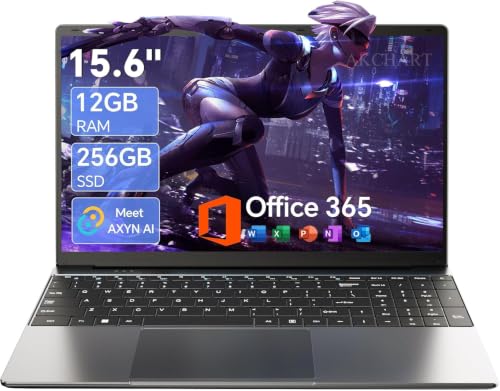
12GB RAM and an M.2 SSD suit everyday multitasking No runtime figure is provided for the battery claim
Read review| Apple MacBook Neo 13-inch (A18 Pro) | 8GB unified memory | 512GB SSD | 9.0 | 8.6 | $789.99 |
| Lenovo V15 G6 | 8GB DDR5 | 256GB PCIe 4.0 NVMe SSD | 8.4 | 8.0 | $339.99 |
| AKCHART M156FH | 12GB DDR4 | 256GB M.2 SSD | 8.8 | 7.6 | $329.98 |
| HP Victus 15 | 16 GB | 512 GB | 8.5 | 7.7 | $844 |
| NIAKUN NY-11 | 16GB | 256GB SSD | 8.4 | 7.3 | $349.99 |
Its strongest purchase tension is clear: the 2.7-pound aluminum design and A18 Pro platform make portability attractive, while 8GB of unified memory, a small two-port setup, and a keyboard that is not backlit in user feedback limit how far this configuration should be pushed.

The Lenovo V15 G6 raises a practical question for office and school buyers: is a lightweight Windows laptop with an Intel N100, 8GB of RAM, and only 256GB of storage the right middle ground, or a configuration that reaches its limits too soon? Its strongest case is a useful business layout with a numeric keypad, Ethernet, four USB ports, Wi-Fi 6, and a 15.6-inch anti-glare display, while the clear trade-off is modest computing headroom and limited storage for large files, games, or creative software.
The AKCHART M156FH raises a practical budget-laptop question: does a large, comfortable Windows setup with 12GB of RAM and a full-size keyboard matter more than having a stronger processor? For students, home offices, and family use, the 15.6-inch 1080p IPS display, 256GB SSD, Office 365 inclusion, and Windows 11 Home create a useful everyday route. The trade-off is clear, though: the Celeron J4105 is an entry-level platform, so this is a productivity laptop rather than a credible choice for demanding creative work, modern gaming, or heavy multitasking.

The HP Victus 15 raises a straightforward gaming-value question: does a 144Hz screen and RTX 3050 graphics justify choosing it over a cheaper everyday laptop? For entry-level gaming, the answer is compelling because the Core i5-12450H, 16GB of RAM, and 512GB PCIe SSD create a much more capable route than basic integrated-graphics hardware. The trade-off is equally clear: the 512GB drive can fill quickly with modern games, and gaming away from the charger brings limited battery life and reduced performance.
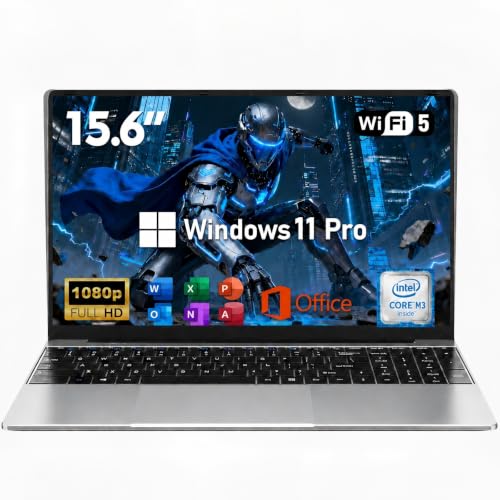
The NIAKUN NY-11 raises a practical budget-laptop question: is 16GB of RAM and a full-HD 15.6-inch display more useful here than extra storage or stronger processing power? For students, home-office workers, and families who want Windows 11 Pro for browsing, documents, Zoom, and Microsoft Office, the answer can be yes. The trade-off is the 256GB SSD and entry-level M3-6Y30 platform, which leave less room for large files and demanding applications than the memory figure initially suggests.
The ranking compares published products with a stable framework: editorial quality, buyer signals, current price when the preset requires it, and comparable category metrics. It does not claim original lab testing; it documents how available signals are weighted so the order remains auditable.
Setup: Collect published reviews, current product data, and comparable technical fields.
Measured variable: Coverage for current price, rating, local review URL, and primary category metrics.
Evaluation rule: Only updated products with enough comparable data can enter.
Setup: Cross editorial score, buyer signals, and price when the preset requires it.
Measured variable: Normalized ranking score on a traceable 0-100 scale.
Evaluation rule: The winner must sustain a stronger balance than the finalists, not just one isolated metric.
This ranking is refreshed from published reviews, current category catalog signals, editorial scoring, and current price. Scores are calculated against the eligible category universe; the visible top only shows the models that pass the final cut.
Descending order: the winner has the strongest balance of Q_final and normalized price against the eligible category universe.
Buyer signal uses the scoring v2 Bayesian score; it is not a simple stars times two conversion.
Computed against eligible comparable category candidates, not only against the visible top. P05=299.243; P95=1569.936.
If a critical axis falls below the threshold, final quality is penalized so one weak product cannot win only on price.
| ASUS Vivobook Go 15.6” Slim | 83.2 | Mobility and battery: 7.3/10. | Ports and connectivity: 6.5/10. |
| HP 2026 Business 14 | 83.0 | Ports and connectivity: 8.1/10. | Performance and configuration: 5.8/10. |
| HP Laptop PC 14 | 82.9 | Mobility and battery: 8.0/10. | Performance and configuration: 5.8/10. |
| HP 15-fc0399nr | 81.4 | Mobility and battery: 7.2/10. | Display and format: 6.5/10. |
| HP UltraBook | 79.9 | Ports and connectivity: 8.0/10. | Display and format: 5.4/10. |
It does not mean choosing the cheapest product by default. The ranking crosses editorial score, buyer satisfaction, useful technical data, and updated price to identify the model with the most defensible balance.
The page prints the latest available refreshed price to make comparison clearer, but Amazon can change price and availability at any time. The live purchase link remains the final check before buying.
Yes. The preset ranking keeps the editorial frame, URL, and components stable while recalculating internal positions when comparable data changes or new models enter the catalogue.
The ranking is not meant to list the whole catalogue. A model first needs a published review, a current price, and comparable signals; then only the set that clears the operational cut is ordered. A product can stay outside the visible top when its price is stale, it has no public URL, its useful data is incomplete, or its balance of quality, user signal, and price remains weaker. This keeps the same freshness gate used across the rest of the site.