
Storage
1024 GB
Storage
The Alienware 16 Aurora raises a useful question for gaming buyers spending roughly a price band around 1000 USD: is a sharp 16-inch screen and dedicated RTX graphics worth accepting a heavier, more desk-oriented machine? For someone who wants Windows 11, a 1TB SSD, 16GB of DDR5 memory, and enough graphics hardware for modern gaming and creation, the answer is compelling. The trade-off is less clear for anyone who needs dependable unplugged work, quiet gaming, or a lightweight daily carry.
Buy it for a gaming-first setup where the WQXGA 120Hz display, RTX 5050, Core 7-240H processor, and upgradeable memory and storage matter more than portability. Skip it if your priority is a thin travel laptop, all-day battery confidence, or a trouble-free replacement for a premium productivity machine. The configuration is strong for the money, but the mixed reports around crashes, heat, and battery behavior make this a better fixed-desk gaming choice than an unconditional everyday recommendation.
| Screen size | 16 inches |
|---|---|
| Resolution | 2560 x 1600 pixels |
| RAM | 16GB DDR5, 5600 MT/s |
| Storage | 1TB M.2 PCIe NVMe solid-state drive |
| Refresh rate | 120Hz |
The 16-inch 2560 x 1600 screen combines a 120Hz refresh rate, 300-nit brightness, 100% sRGB coverage, and anti-glare treatment.
Games gain smoother motion and sharper menus, while the 16:10 shape gives documents more vertical room. It is a strong indoor display, but it is not positioned as an OLED or high-contrast premium panel.
The dedicated NVIDIA GeForce RTX 5050 includes 8GB of GDDR7 memory and support for current AI-assisted gaming features such as DLSS 4.
That makes this configuration meaningfully more suitable for demanding games and GPU-accelerated creation than laptops using integrated graphics. Maximum settings and smoothness still depend on the individual game and workload.
The 16GB configuration uses two DDR5 modules, and the laptop provides two user-upgradeable memory slots plus two PCIe Gen 4 SSD slots.
The 1TB SSD is a comfortable starting point for a game library, while the upgrade path reduces long-term storage pressure. Expansion may require additional hardware for certain 2230 SSD installations, so the upgrade story is useful but not entirely friction-free.
The Cryo-Chamber draws air toward the core components and works with dual fans, three copper heat pipes, and four exhaust vents.
Dell also includes one year of onsite service for covered hardware issues that cannot be resolved remotely. Cooling reports are mixed, and onsite service is valuable support rather than a guarantee against heat, noise, or software instability.
At a gaming desk, the first decision is whether the display is detailed enough to justify the larger chassis. The 16-inch 16:10 panel delivers 2560 x 1600 resolution, or roughly 189 pixels per inch, so text, game interfaces, and fine scene detail have a crisp foundation. Its 120Hz refresh rate gives fast movement a smoother target than a conventional 60Hz laptop, while the stated 300-nit brightness and anti-glare coating make ordinary indoor use more comfortable. The limitation is that this is still a gaming screen rather than an OLED showcase, so buyers chasing deep contrast or vivid HDR-style impact should look elsewhere.
For a normal work or study morning, the Core 7-240H, 16GB of DDR5 memory, and 1TB SSD create a sensible balance for browsers, documents, streaming, and installed games. The 1TB capacity also avoids the immediate storage squeeze common to smaller gaming configurations, while two upgradeable DDR5 slots and two PCIe Gen 4 SSD slots leave room for expansion. The numeric keypad helps with spreadsheets and number-heavy work, but it also makes this 16-inch body wider than a minimalist office laptop. That layout is useful at a desk and less attractive in a crowded backpack.
When the session shifts from documents to demanding games, the dedicated RTX 5050 with 8GB of GDDR7 graphics memory is the defining advantage. NVIDIA's Blackwell architecture, DLSS 4, and Reflex 2 support give compatible games modern image-quality and latency tools, while the Cryo-Chamber design, dual fans, copper heat pipes, and four exhaust vents are built for sustained performance. That hardware route comes with familiar gaming-laptop compromises: fans can become noticeable during high-demand play, and thermal comfort is not equally consistent across experiences. If random shutdowns, freezes, or blue screens would disrupt work or school, the mixed stability record is a reason to choose a more conservative alternative rather than treat this as a universal laptop.
Community
The overall buyer lesson is straightforward: speed, sharp visuals, quick loading, and value are the main reasons this laptop wins people over. The disappointment comes when battery life, heat, sound, software updates, or stability become more important than gaming performance. It is a convincing performance machine when the power adapter and a sensible desk setup are part of the routine.
The laptop feels fast from startup, handles gaming and multitasking smoothly, has a sharp colorful display, a comfortable keyboard, and well-managed cooling.
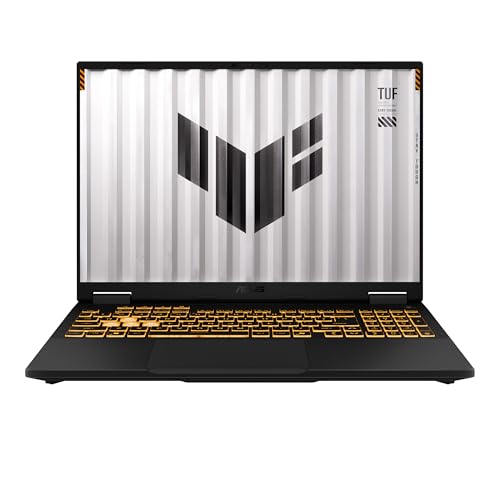
| Attribute | Alienware 16 Aurora Current | ASUS TUF Gaming F16 Gaming | ASUS TUF Gaming A16 | Acer Nitro V 16S AI |
|---|---|---|---|---|
| Price | $1,290.00 | $1,234.00 | $1,090.00 | $1,449.99 |
| Screen size | 16 inches | 16 inches | 16 inches | 16 inches |
| Resolution | 2560 x 1600 pixels | FHD+ | - | 1920 x 1200 |
| Refresh rate | 120Hz | 165Hz | 144Hz | 180Hz |
| RAM | 16GB DDR5, 5600 MT/s | 16GB DDR5 | 16GB DDR5 | 32GB DDR5-5600 |
| Storage | 1TB M.2 PCIe NVMe solid-state drive | 512GB PCIe Gen4 SSD | 512GB SSD | 1TB PCIe Gen 4 SSD |
| Editorial score | 78/100 | 84/100 | 80/100 | 74/100 |
Against the Apple MacBook Air 13.6-inch with the M5 chip and 16GB of memory, the Alienware is the clearer choice for Windows gaming, dedicated graphics, a larger high-refresh display, and a 1TB storage starting point. The MacBook Air is the more logical route for buyers who value a smaller screen, a lighter everyday profile, and a productivity-first experience over RTX gaming capability.
The HP OmniBook 7 Flip 16 and Lenovo Yoga 7i are better alternatives when touch or convertible flexibility, office comfort, and general-purpose use lead the decision. The HP pairs a 16-inch 1920 x 1200 touch display with an Intel Core Ultra 7 258V, 32GB of memory, and integrated Intel Arc graphics, while the Lenovo offers a 16-inch 1920 x 1200 display, Core Ultra 7 155U, and 16GB of RAM. Choose the Alienware when dedicated GPU performance and 2560 x 1600 gaming detail come first, and choose either alternative when mobility, touch-oriented use, or a calmer office route matters more.
Compare with
Add a second model to activate the direct comparison.



No products match that filter combination.
The Alienware 16 Aurora earns its place as a gaming-performance laptop because the combination is unusually coherent for the route: a Core 7-240H, RTX 5050 with 8GB GDDR7, 16GB DDR5, 1TB SSD, and a sharp 120Hz WQXGA screen. It is especially attractive for a buyer who keeps the machine on a desk, wants Windows gaming without immediately upgrading storage, and values a numeric keypad. Check the current offer if that combination fits your budget.
The skip rule is just as important. If you need a dependable travel companion, a quiet lap machine, or a workstation for sensitive daily projects, the reported shutdowns, freezes, heat, and uneven battery experience make this purchase too conditional. In that case, a clearer productivity or convertible alternative is the safer route, even if it gives up the RTX 5050's gaming headroom.
Treat it as a plug-in gaming laptop first. Some experiences describe respectable light-use battery life, while others report short battery life or blue screens away from the charger.
Yes. It has two user-upgradeable DDR5 SO-DIMM slots and two PCIe Gen 4 SSD slots, although some 2230 SSD upgrades may need a bracket and thermal pad.
Review published on