
GIGABYTE GAMING A16 CVHI3US894SH Laptop - Review and opinions

Storage
Quick verdict
The GIGABYTE GAMING A16 is aimed at buyers who want a Windows gaming machine with a dedicated RTX 5060, a fast 165Hz display, and enough storage for a substantial game library without immediately moving into a higher price tier. Its real appeal is the combination of the Core i7-13620H, 16GB of DDR5 memory, and 1TB SSD. The trade-off is that this is a performance-first 16-inch laptop rather than a quiet, effortless travel computer: the large display, gaming hardware, and reports of loud fans make desk-based use a better fit than long unplugged sessions.
Buy it for gaming, school, or general creation when graphics headroom matters more than minimum weight and absolute silence. Skip it if your priority is a convertible touchscreen, a highly portable office machine, or a consistently quiet laptop for meetings and libraries. Around the $1,100 range, the A16 makes its case through the RTX 5060 and 165Hz screen, but its value depends on whether you will actually use that performance rather than treating it as a premium extra.
| Screen size | 16 inches |
|---|---|
| Resolution | 1920 x 1200 pixels |
| Processor | Intel Core i7-13620H |
| RAM | 16 GB DDR5 |
| Storage | 1 TB PCIe Gen4 NVMe M.2 SSD |
| Graphics | NVIDIA GeForce RTX 5060 Laptop GPU |
RTX 5060 gaming headroom
The dedicated NVIDIA GeForce RTX 5060 Laptop GPU gives this machine a clear gaming identity and also supports creator-oriented tools such as NVIDIA Studio and DLSS 4.
It is the component that separates the A16 from ordinary student laptops, although the benefit matters less if your workload is limited to documents, streaming, and light applications.
165Hz 16:10 display
The 16-inch 1920x1200 IPS display combines extra vertical space with a refresh rate suited to fast games.
Its 300-nit brightness and NTSC 45% color coverage keep the buying decision focused on smooth gaming and general use rather than professional color grading.
Flexible desk setup
The 180-degree hinge can lay flat for collaborative or unusual desk positions, while USB-C supports DisplayPort 1.4, USB Power Delivery 3.0, and a claimed 50% battery charge in 30 minutes.
This helps when the laptop works as part of a monitor setup, but the AC adapter remains the sensible choice for sustained gaming.
Performance and experience
At a desk with a game, browser tabs, and recording software open, the A16 has the right configuration for a demanding Windows routine. The Core i7-13620H, RTX 5060, 16GB of DDR5 memory, and 1TB NVMe SSD leave substantially more room for gaming and multitasking than an integrated-graphics laptop. The practical limit is not basic responsiveness but expectations: the RTX 5060 makes this a credible performance route, while the exact result still depends on the game, settings, and cooling profile.
For reading documents, browsing, and gaming after work, the 16-inch 16:10 panel gives more vertical workspace than a typical 16:9 screen. At 1920x1200, its roughly 141 pixels per inch keep text and interface elements suitably detailed at this size, while 165Hz makes fast movement a central part of the experience rather than a token feature. The 300-nit brightness and NTSC 45% color claim place it closer to practical gaming and everyday use than color-critical creative work, so creators who need wide-gamut accuracy should choose a different route.
On a commute or at the kitchen table, the 19.45mm chassis and 180-degree hinge make the physical format easier to adapt than a bulky traditional gaming design. That does not turn it into an ultrabook: weight is not provided, and the dedicated GPU brings a performance-oriented power profile. Plan demanding gaming around the AC adapter, while USB-C adds useful flexibility through DisplayPort 1.4 and USB Power Delivery 3.0. The 0dB cooling claim is targeted at light workloads, and one buyer specifically reports that the fan is loud, making quiet shared spaces a poor match.
Pros
- RTX 5060 dedicated graphics with a performance-focused Core i7 processor
- 165Hz 1920x1200 display with a useful 16:10 layout
- 1TB PCIe Gen4 NVMe SSD and 16GB DDR5 memory
- USB-C supports DisplayPort 1.4 and USB Power Delivery 3.0.
Cons
- Fan noise can be intrusive during use
- 300 nits and NTSC 45% are limiting for bright rooms and color-critical creation
- The 16-inch gaming format is a weaker fit for frequent travel than a smaller, lighter office laptop
- Battery life is reported positively, but demanding gaming remains an AC-powered activity.
Community
User reviews
The overall reaction is positive but not uniform. The strongest praise centers on gaming power, graphics, thinness, and battery life, while the clearest practical complaint is fan noise. The 3.9-star average across 26 ratings makes this a capable but not risk-free choice, especially for buyers who need quiet operation.
This is one of the best laptops I have found. It is extremely durable and thin, while providing excellent gaming performance and battery life.
At first glance, it looks like one of the best options on the market, with good components.
Comparison
| Attribute | GIGABYTE GAMING A16 CVHI3US894SH Current | ASUS ROG Strix G16 G614JV-AS74 Gaming | Alienware 16 Aurora | ASUS TUF Gaming A16 |
|---|---|---|---|---|
| Price | Out of stock | $1,539.99 | $1,334.00 | $1,099.00 |
| Screen size | 16 inches | 16 Inches | 16 inches | 16 inches |
| Resolution | 1920 x 1200 pixels | 1920 x 1200 pixels | 2560 x 1600 pixels | - |
| Processor | Intel Core i7-13620H | Core i7-13650HX | - | - |
| Graphics | NVIDIA GeForce RTX 5060 Laptop GPU | - | - | NVIDIA GeForce RTX 4050 dedicated graphics |
| RAM | 16 GB DDR5 | 16 GB | 16GB DDR5, 5600 MT/s | 16GB DDR5 |
| Storage | 1 TB PCIe Gen4 NVMe M.2 SSD | 1 TB | 1TB M.2 PCIe NVMe solid-state drive | 512GB SSD |
| Editorial score | 73/100 | 84/100 | 78/100 | 80/100 |
Against the HP OmniBook 7 Flip 16, the GIGABYTE is the performance choice. The HP brings a 16-inch 1920x1200 touchscreen, a convertible design, 32GB of RAM, and integrated Intel Arc 140V graphics, so it makes more sense for flexible study, handwriting, and office use. Choose the A16 when the RTX 5060 and 165Hz gaming display solve the main problem, and choose the HP when touch and tablet-style positioning matter more than dedicated graphics.
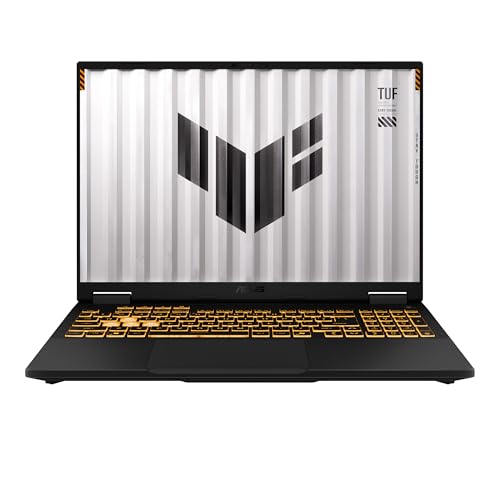
The ASUS TUF Gaming F16 is the closer gaming alternative among the prepared options, with a 16-inch FHD+ screen, Intel Core i5-13450HX, and 16GB of DDR5 memory. The A16 has the stronger stated platform combination through its Core i7-13620H, RTX 5060, 1920x1200 resolution, and 1TB SSD. The ASUS route deserves attention for buyers who want a straightforward gaming configuration, while the GIGABYTE is the more compelling fit when graphics capability and storage headroom are the deciding factors.
Compare with Compare this model This product stays fixed; add a recommended alternative or search another model in the category.
Compare with
Add a second model to activate the direct comparison.
Recommended models




No products match that filter combination.
Is the GIGABYTE GAMING A16 CVHI3US894SH laptop worth it?
The GIGABYTE GAMING A16 earns its place as a gaming-performance laptop rather than a generic 16-inch computer. The RTX 5060, Core i7-13620H, 165Hz 1920x1200 display, 1TB SSD, and flexible USB-C connectivity create a strong route for gaming, recording, multitasking, and casual creation. If that is your workload, check the current offer and the A16 becomes a focused alternative to integrated-graphics machines.
The skip rule is equally clear. Buyers who need quiet operation, professional color coverage, tablet flexibility, or effortless daily carrying should choose a more specialized laptop. The reported loud fan and the display's NTSC 45% coverage are meaningful limitations, not footnotes, while the 3.9-star rating shows that the performance package does not eliminate ownership trade-offs. Choose the A16 for graphics headroom and accept the gaming-laptop compromises.
FAQ
Is this laptop suitable for everyday school or office work?
Yes, Windows 11 Home, 16GB of DDR5 memory, and a 1TB SSD cover normal documents, browsing, messaging, and media use comfortably, but the gaming format is more machine than necessary for buyers who do not need the RTX 5060.
Can the USB-C port replace the main charger?
USB-C supports DisplayPort 1.4 and USB Power Delivery 3.0, so it is useful for compatible displays and charging scenarios, while sustained gaming is better handled by the included AC adapter.
Review published on