
Price
$200-$300
Price
The Samsung 14" Galaxy Chromebook Go makes the most sense for a student, light office worker, or casual home user who wants a simple ChromeOS machine that is easy to carry and quick to settle into. Its appeal is straightforward: a 14-inch screen, 4GB of RAM, 64GB of storage, and a lightweight build aimed at everyday browser work. The main trade-off is equally clear, though: this is a basic Chromebook, so it is built for comfort and convenience more than for heavy multitasking or storage-hungry work.
Buy it if your day lives in Chrome, Google Docs, email, streaming, and schoolwork, and you want something that stays portable without feeling fragile. Skip it if you need a laptop for demanding apps, lots of local files, or a machine that leaves more headroom for long-term growth. The value case is real, but it depends on accepting a modest spec set and a display that is serviceable rather than expansive.
| Screen Size | 14 Inches |
|---|---|
| Resolution | 1366 x 768 pixels |
| Processor | Celeron N |
| RAM | 4 GB |
| Storage | 64 GB |
| Operating System | Chrome OS |
The 14-inch size gives the laptop enough room for everyday work without turning it into a burden in a bag. That matters because this model is clearly aimed at people who move between classes, rooms, or short work sessions.
The practical upside is easy carry and easy setup, especially for browser work and document editing. The trade-off is that the screen is functional rather than luxurious, so it is best treated as a practical workspace, not a premium viewing panel.
ChromeOS keeps the experience centered on Google apps, web tools, and quick sign-in use. That is a strong fit for school, email, and light productivity because it reduces the amount of setup and maintenance most buyers have to think about.
The practical implication is that the laptop feels approachable even for less technical buyers. The limitation is that it is not the right route for software that depends on a full Windows-style environment or for users who want lots of local storage headroom.
The battery is positioned for a full school day and beyond, which is one of the strongest reasons to consider this model. Battery life is one of the few features that can change whether a budget laptop feels genuinely mobile or just cheap.
That makes the Chromebook easier to recommend for commuting, class, or casual home use. If your routine keeps you away from outlets for long stretches, this is one of the few confirmed strengths that directly supports the purchase.
Open this on a desk for a school morning, and the first thing that matters is how quickly it gets out of the way. The 14-inch size keeps it in a practical middle ground for notes, tabs, and documents, while the lightweight design makes it easy to move from kitchen table to backpack to classroom. That portability is a real strength for a Chromebook this affordable, but the 1366 x 768 display resolution also sets the ceiling: it is fine for browsing and writing, yet it does not give you the roomy, crisp workspace of a higher-resolution panel.
For writing sessions, the basic ChromeOS setup and the 4GB/64GB configuration tell the story. This is a machine for one or two focused tasks at a time, not for piling on heavy tabs, downloads, and desktop software. The upside is simplicity, and the user experience lines up with that idea: easy setup, easy navigation, and a browser-first routine that keeps friction low. The downside is that storage pressure arrives quickly if you keep much offline, so the cleanest fit is for cloud-centered work and light local use.
On the move, the battery and build claims matter more than raw speed. The promised 12-hour battery and the “military tough” framing make this a credible room-to-room or campus laptop, and the repeated theme of all-day use fits the kind of buyer who wants to leave the charger behind for part of the day. At the same time, the mixed speed and reliability feedback means this is not the machine for someone who wants a no-compromise daily driver. It is better suited to a budget-minded buyer who values portability and low hassle over extra performance cushion.
Community
The pattern is consistent: people are happiest when they treat this as a simple, affordable Chromebook for school, browsing, and everyday tasks. Frustration shows up when expectations drift toward faster multitasking, stronger screen quality, or more ambitious use. The practical lesson is that the value is real, but only if the buyer wants a light-duty ChromeOS laptop rather than a do-everything notebook.
I couldn’t be happier with my Samsung 14" Galaxy Chromebook Go. It is lightweight, fast, and incredibly easy to use.
The battery life is good as well and it is really portable.
Very functional computer. It loads tabs quickly and streams video perfectly.
It is a bit slow even for just Chrome tabs, but the flexibility and portability make it a good value.
| Attribute | Samsung Galaxy Chromebook Go Current | HP 14" HD Chromebook | HP 14a-na0226nr | Lenovo IdeaPad 1i |
|---|---|---|---|---|
| Price | $208.00 | $229.00 | $227.00 | $256.78 |
| Screen Size | 14 Inches | 14 Inches | 14 Inches | 14 Inches |
| Resolution | 1366 x 768 pixels | 1366 x 768 pixels | 1366 x 768 pixels | 1366 x 768 pixels |
| Processor | Celeron N | - | Intel Celeron N4120 | - |
| RAM | 4 GB | 4GB LPDDR4x-4266 MHz RAM | 4 GB | 12 GB installed |
| Storage | 64 GB | 64GB eMMC | 64 GB eMMC | 1.25 TB SSD |
| Editorial score | 62/100 | 66/100 | 64/100 | 69/100 |
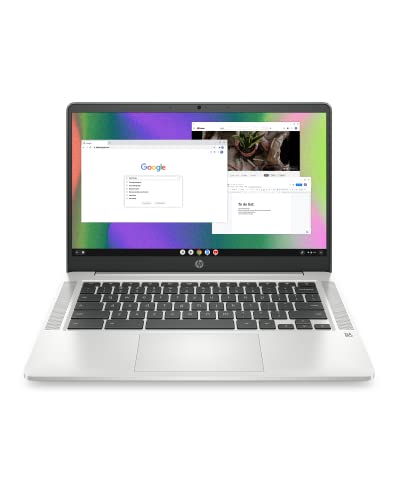
Against the HP 14" HD Chromebook, this Samsung is very close in the basic-school-laptop lane, with the same 14-inch, 1366 x 768, 4GB, 64GB shape of compromise. The choice comes down to the feel of the package and the value you get from the Samsung brand and its battery-focused positioning. Pick this Samsung if you want a straightforward, portable Chromebook for class and browsing; pick the HP if you are simply shopping the same budget format and want to compare the two side by side on price and finish.
Compared with the Lenovo Newest Flagship Lenovo Chromebook, the Samsung gives up display sharpness because the Lenovo moves to a 1920 x 1080 panel while staying at 4GB RAM. That makes the Lenovo the better route for buyers who care more about reading comfort and screen clarity, while this Samsung remains the simpler pick for buyers who prioritize a lightweight, no-fuss Chromebook and can live with a lower-resolution display. The ASUS 15.5 Laptop is the broader-screen alternative, but it is less obviously the same portable student route; if you want more screen area and do not mind a larger footprint, that style of machine makes more sense than this one.
Compare with
Add a second model to activate the direct comparison.



No products match that filter combination.
This is a good buy for a budget-conscious student or casual user who wants a light Chromebook for everyday browser work, school tasks, and easy portability. The 14-inch size, ChromeOS simplicity, and 12-hour battery claim make the route clear, and the current offer is attractive if you want a basic laptop that stays out of the way more often than not.
Skip it if you need sharper screen detail, more storage, or a machine that can absorb heavier multitasking without friction. The modest resolution, 4GB RAM, and mixed speed/reliability signals define the ceiling, so the right buyer is the one who values convenience and price over headroom.
Yes. It fits schoolwork, Google Docs, browsing, and streaming well, and the lightweight build plus battery-focused positioning make it easy to carry.
For light ChromeOS tasks, yes, but the 4GB RAM and mixed speed feedback mean it is best kept to simple workloads rather than heavy multitasking.