Review Routers TP-Link

TP-Link Archer AX55 Router - Review and opinions

TP-Link Archer AX55
82 /100 Overall

Quick recommendation

Value for money 81/100
Ease of use 85/100
Durability 74/100
Customer reviews 88/100

Is it worth it?

The Archer AX55 is for a home that wants faster Wi-Fi, better room-to-room coverage, and a cleaner setup than an ISP box usually gives. Its appeal is straightforward: Wi-Fi 6 capacity, gigabit networking, VPN support, and a four-antenna design that fits the everyday pain points of streaming, gaming, and a house full of devices. The trade-off is that its strengths are aimed at normal home networking rather than multi-gig speed chasing.

This is an easy router to recommend for a typical household with 1 Gbps or slower service, especially if you want stronger wireless coverage, simple management, and useful extras like VPN and HomeShield. Skip it if your buying priority is 2.5G wired networking or a clearly higher-end performance route, because this model is built to solve the home Wi-Fi problem first and the advanced wired-backbone problem second.

Wi-Fi standard 802.11ac, 802.11ax, 802.11b, 802.11g, 802.11n
Wireless speed 2402 Mbps on 5 GHz and 574 Mbps on 2.4 GHz
Ports Ethernet, USB, Wi-Fi
Security HomeShield with Basic Network Security, IoT Device Identification, Basic Parental Controls, QoS, and Basic Weekly/Monthly Reports
Antennas 4 high-gain external antennas
Color Black

Key features

Wi-Fi 6 Capacity

The AX55 is built around Wi-Fi 6 with dual-band operation, 2402 Mbps on 5 GHz, and 574 Mbps on 2.4 GHz. That combination matters because it gives a normal home more room for streaming, gaming, calls, and smart devices without forcing everything onto one crowded lane.

The practical upside is better behavior when the household is busy, not just a bigger number on the box. The limit is simple too: if your internet plan and devices are modest, the extra headroom helps comfort more than it changes the whole experience.

Coverage and Placement

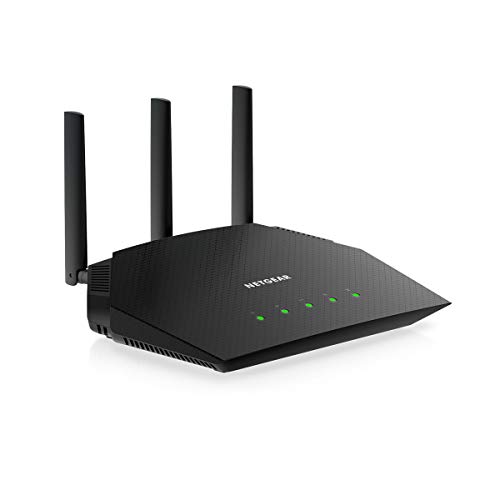
Four high-gain external antennas and Beamforming are the core coverage tools here, and they fit the kind of apartment or house where signal has to travel through a few rooms. That is the right answer for buyers who want one strong router in a central spot rather than a more complex mesh layout.

In daily use, that means fewer dead corners and less fiddling with extender placement. The trade-off is that coverage tools improve reach, but they do not replace a second node when the floor plan is difficult or the home is large.

Setup and Control

The router supports easy setup through the app or a computer, plus Alexa voice control, VPN client and server support, and TP-Link HomeShield basics. That is a strong convenience mix for a buyer who wants the network to be manageable without turning it into a hobby.

The upside is low-friction ownership once it is online, especially for changing passwords, managing guests, or setting basic protection. The caveat is that the more advanced extras are useful because they are there, not because everyone will need them every day.

Home Security Extras

HomeShield’s free tier includes basic network security, IoT device identification, parental controls, QoS, and weekly or monthly reports. That makes the AX55 more appealing for a family network than a bare-bones speed box.

It is a real buying advantage if you want simple guardrails without adding separate software or another subscription on day one. The practical limitation is that the strongest value comes from the basics, while the premium security path remains an upsell.

User experience

In a family room with a streaming TV, phones, and a console all active at once, the AX55’s Wi-Fi 6 setup is the part that matters most. The dual-band design and OFDMA are aimed at keeping traffic moving when several devices share the same connection, and that lines up with the recurring theme of smooth setup and strong everyday reliability. For a household that is tired of buffering, the practical win is less about headline speed and more about fewer slowdowns when everyone is online at once.

Move it to a hallway shelf or a closet and the coverage story becomes more important than raw throughput. Four external antennas and Beamforming are the right ingredients for a normal house, and the confirmed user reports of stronger signal across larger spaces fit that use case well. The upside is better reach without jumping straight to mesh; the limit is that this is still a single-router solution, so very large or awkward homes may outgrow it faster than a mesh system would.

For wired gear, the AX55 makes the most sense as a clean gigabit hub for a desktop, console, or modem handoff. The included Ethernet cable and four LAN ports give it enough flexibility for a basic home office or entertainment center, and the USB 3.0 port adds a practical side benefit for sharing storage or backups. The catch is that this is not the router for a buyer who already knows they need multi-gig wired headroom; it is built to make gigabit service feel solid and easy, not to turn a fast fiber plan into a speed brag.

Pros

  • Strong fit for typical home Wi-Fi with Wi-Fi 6, dual-band capacity, and beamforming
  • Easy setup through app or computer with useful everyday controls
  • Good value for households that want better coverage without moving to mesh or multi-gig hardware
  • VPN client and server support add flexibility for power users.

Cons

  • Not the right pick if 2.5G wired networking is part of the plan
  • Smart Connect can be a poor match for devices that do better on separate bands
  • HomeShield’s fuller security path costs extra beyond the basic features
  • Very large or awkward homes may still need mesh instead of a single router.

Community

User reviews

The pattern is clear: people who want an easy upgrade from an older router tend to be happy, especially when the goal is stronger signal, faster Wi-Fi, and a setup that does not waste time. The disappointment usually shows up when someone expects it to solve every network problem, especially if the issue is more about the internet line or a more advanced wired setup than about home Wi-Fi itself.

Trs

I moved up from an Archer C7 and the signal is a little better, especially on 5 GHz. Smart Connect was not my favorite, so I split the bands and kept going.

Al

I replaced an older setup and the jump in wireless speed and coverage was huge. It handled a fiber connection with no drama and gave me much better Wi-Fi around the house.

Dominic

This is a much needed upgrade for a 1Gb plan. It is a great value, easy to set up, and fits well if you do not need 2.5 Gbps speeds.

Adian

I bought it used and it arrived in mint condition with everything in the box. Setup was easy and the Wi-Fi performance is very good, but it did not fix my packet loss issue.

Comparison

Attribute TP-Link Archer AX55 Current TP-Link Archer BE230 TP-Link Archer AXE75 NETGEAR RAX54S
Price 79.98 USD 84.99 USD 99.98 USD 55.04 USD
Ports Ethernet, USB, Wi-Fi 1 2.5G WAN/LAN port, 1 2.5 Gbps LAN port, 3 1 Gbps LAN ports - 4 x 1 Gig Ethernet ports and 1 USB 3.0 port
Wi-Fi standard 802.11ac, 802.11ax, 802.11b, 802.11g, 802.11n Wi-Fi 7 (802.11be) 802.11ax 802.11ax
Security HomeShield with Basic Network Security, IoT Device Identification, Basic Parental Controls, QoS, and Basic Weekly/Monthly Reports HomeShield with parental controls and real-time IoT security WPA3 Security security features enabled out of the box with automatic firmware updates and NETGEAR Armor included for 1 year
Antennas 4 high-gain external antennas 4 internal antennas - -
Editorial score 82/100 79/100 82/100 77/100

Against the TP-Link Archer BE230, the AX55 is the simpler home Wi-Fi buy. The BE230 is the newer Wi-Fi 7 route and is better suited to buyers who want a more future-facing platform, while the AX55 makes more sense if you want a proven Wi-Fi 6 router with gigabit ports, VPN support, and less money tied up in features you may not use.

Compared with the NETGEAR RAX54S, the AX55 leans more toward straightforward home networking and flexible setup, while the NETGEAR route is the one to look at if security automation and a more performance-forward AX5400 class matter more to you. If your priority is normal household coverage, easy control, and a cleaner value story, the TP-Link is the more direct fit. If you want the stronger security bundle and do not mind a different brand approach, the NETGEAR is the sharper alternative.

The TP-Link Archer AXE75 sits above this model when the buyer wants a higher-end Wi-Fi 6 path with more headroom and a more performance-oriented position. The AX55 is the better choice when you want the practical middle ground: strong home coverage, useful extras, and a price-to-feature balance that makes sense for ordinary internet plans.

Conclusion and verdict

The Archer AX55 makes the most sense as a well-rounded home router for buyers who want stronger Wi-Fi, simple setup, VPN flexibility, and enough wired ports to cover the usual desk, console, and streaming gear. It is the kind of upgrade that feels immediately useful because it solves the everyday problems most households actually have, and it does so without forcing you into a more expensive platform. If the current offer is in the right range, it is an easy value pick for normal home networking. The clearest reason to skip it is also clear: if your setup depends on multi-gig wired speed, a more advanced mesh layout, or a higher-end performance tier, this is not the final stop. The AX55 is built for dependable home Wi-Fi first, and that focus is exactly why it works so well for its target buyer.

Still, compare TP-Link Archer AX55 with close alternatives if warranty, noise, real battery life, or included accessories are decisive for you.

FAQ

Is this router a good fit for a 1 Gbps home plan?

Yes. It matches that kind of household well, with strong Wi-Fi 6 support, gigabit networking, and enough capacity for streaming and gaming at the same time.

Does it replace a mesh system for a large home?

Not always. It is a strong single-router choice for typical homes, but very large or awkward floor plans can still benefit from mesh.

Jake Miller

About the author

Jake Miller

As a passionate tech enthusiast, I review the latest PCs, laptops, and hardware components. With detailed tests and honest insights, I aim to help users build or buy the perfect setup for their needs.
