Pros
- Easy setup with a clean app and useful controls.
- Strong tri-band Wi-Fi 6E capacity for busy homes.
- OneMesh support gives it a practical upgrade path.
- WPA3 and HomeShield add a more reassuring security baseline.
The Archer AXE75 makes the most sense for a home that is tired of weak corners, crowded bands, and a router that turns setup into a weekend project. Its value is the mix of Wi-Fi 6E, tri-band capacity, and a straightforward app-driven install, with the real trade-off being that the strongest case is still a home-network case rather than a multi-gig or advanced wired-backhaul play.
Buy it if you want an affordable Wi-Fi 6E router for a busy house, gaming room, or streaming-heavy setup and you care more about clean coverage and easy management than cutting-edge wired speeds. Skip it if your purchase depends on multi-gig ports or you want the newest platform class, because this model’s appeal is centered on stable everyday wireless use, not bleeding-edge hardware bragging rights.
| Wi-Fi Standard | 802.11ax |
|---|---|
| Wireless Speed | Up to 5400 Mbps WiFi |
| Mesh Support | OneMesh Supported |
| Security | WPA3 Security |
| Frequency Band Class | Tri-Band |
| Included Components | Power Adapter, Quick Installation Guide, RJ45 Ethernet Cable, Wi-Fi Router Archer AXE75 |
The AXE75 combines 2.4 GHz, 5 GHz, and 6 GHz coverage with a stated top speed of 5400 Mbps, which is the core reason it stands out in a crowded home. The practical benefit is capacity, not just speed on a single device, so households with multiple streams, calls, and game sessions get a better shot at staying smooth at the same time.
The limit is that the 6 GHz band is most useful when the device supports it and when the home layout lets that band reach where it needs to go. If your network life is mostly one laptop in one room, the extra band matters less; if your home is busy and congested, it matters a lot more.
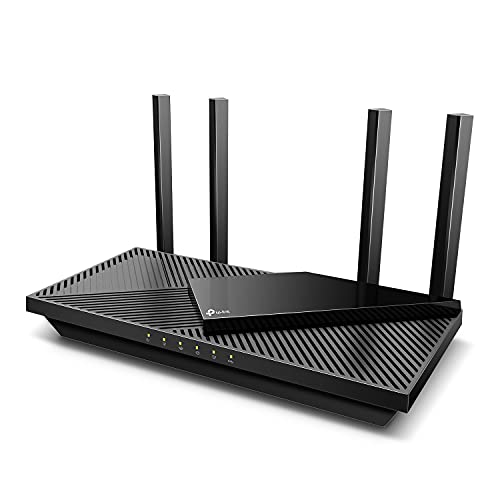
The router is built around a guided setup and a management app that gives access to the settings people actually use, including parental controls, QoS, guest networking, and device management. That is a real advantage for buyers who want to get online quickly and then make small changes without calling the whole thing a project.
The practical consequence is lower daily friction. It is easier to hand this router to a household and expect it to stay usable, but the more advanced VPN and security features are still a step beyond the basics, so this is strongest for buyers who want control without wanting to become their own network administrator.
OneMesh support gives the AXE75 a clear expansion path if the house later needs more coverage, and WPA3 plus HomeShield features add a stronger security story than a bare-bones router. That combination matters because it keeps the router useful as the home grows instead of forcing an immediate replacement.
The caveat is that OneMesh is an ecosystem route, not a universal mesh shortcut. It is a good fit if you already lean toward TP-Link expansion, and less compelling if you want the broadest possible mesh flexibility from day one.
In a family room full of phones, tablets, consoles, and streaming boxes, the AXE75 is the kind of router that earns its keep by reducing the daily shuffle between bands and dead spots. The confirmed tri-band layout and 6 GHz support fit the exact pain point of too many devices competing at once, and the practical upside is less buffering, fewer dropped connections, and a cleaner path for gaming or video chat when the network is busy.
For a desk with a gaming PC or a console in the next room, the AXE75 has the right shape for low-friction wireless use: Wi-Fi 6E, OFDMA, and a quad-core CPU are all aimed at keeping traffic moving when the household is active. The trade-off is that the headline 5400 Mbps is a ceiling, not a promise, so the real buyer question is whether you want a router that spreads load well and stays responsive rather than one built around flashy port counts.
Setup is where this model earns a lot of goodwill. The recurring pattern is quick installation, a clean app, and enough controls to satisfy a buyer who wants guest access, QoS, parental controls, and VPN support without digging through a maze of menus. That makes it an easy fit for a first-time upgrade or a replacement router, while the one caution is that the best experience comes from a straightforward home network rather than a more specialized wired layout.
Community
The strongest pattern here is simple: people tend to love this router when they want easy setup, stronger whole-home coverage, and a fair price for Wi-Fi 6E. The main disappointment shows up when expectations drift toward advanced hardware or when the network gets more specialized, so the practical lesson is to buy it for wireless stability and convenience, not for a fancy port story.
Easy setup. Lots of options. So far, not one network issue in our medium sized repair facility. WIFI coverage on 2.4, 5.0 and 6.0 Mhz is excellent.
Quick and easy to set up. Connect wires and avoid a circular setup if your network is more complex.
Great router, 6E getting me 900mb/s on fiber. Great customization options for this unit in settings. Very happy with my purchase.
Great product and very easy to set up, signal is amazing in my house (3200 sq ft).
| Attribute | TP-Link Archer AXE75 Current | TP-Link Archer BE230 | TP-Link Archer AX55 |
|---|---|---|---|
| Price | 99.98 USD | 84.99 USD | 79.98 USD |
| Wi-Fi Standard | 802.11ax | Wi-Fi 7 (802.11be) | 802.11ac, 802.11ax, 802.11b, 802.11g, 802.11n |
| Mesh Support | OneMesh Supported | EasyMesh compatible | - |
| Security | WPA3 Security | HomeShield with parental controls and real-time IoT security | HomeShield with Basic Network Security, IoT Device Identification, Basic Parental Controls, QoS, and Basic Weekly/Monthly Reports |
| Editorial score | 82/100 | 79/100 | 82/100 |
Against TP-Link’s Archer BE230, the AXE75 is the better fit when your priority is affordable Wi-Fi 6E and a straightforward home upgrade. The BE230 moves into Wi-Fi 7 and adds 2.5G ports, so it belongs with buyers who care more about newer wired headroom and platform longevity than about keeping the purchase price in the lower Wi-Fi 6E lane.
Compared with a typical ISP gateway or a basic dual-band router, the AXE75 is the more convincing choice for a crowded house that needs better range, more capacity, and less setup friction. If you only need a simple internet handoff for a small apartment, the extra bands and OneMesh path are overkill; if you are feeding a family network with gaming, streaming, and lots of devices, this is the stronger route.
The Archer AXE75 is an easy recommendation for buyers who want a reasonably priced Wi-Fi 6E router that makes a household network feel calmer, not more complicated. Between the tri-band layout, WPA3, OneMesh support, VPN support, and the repeatedly praised setup experience, it solves the right problem for a lot of homes, and the current offer is the kind of price that makes the value story easy to understand. Skip it if your decision hinges on multi-gig wired ports, the newest Wi-Fi generation, or a more specialized networking layout. For everyone else, this is a sensible home Wi-Fi upgrade with one clear reservation: its best case is wireless coverage and capacity, not advanced wired expansion, so the right buy depends on whether that is the problem you actually need solved.
Still, compare TP-Link Archer AXE75 with close alternatives if warranty, noise, real battery life, or included accessories are decisive for you.
Yes. The tri-band Wi-Fi 6E design, OFDMA support, and easy setup make it a strong fit for homes with many connected devices.
Not fully. It supports OneMesh with compatible TP-Link extenders, so it is a good base for expansion rather than a universal whole-home mesh kit.