10 models analyzed

Best Desktops 2026

Reviews and comparisons for Desktops, focused on configuration balance, chassis and airflow so you can choose by use case and budget.

Category data snapshot

Practical snapshot of Desktops: current prices, documented specs, and the axes where reviewed products differ most.

Typical current price

$1,519.99 reference price
range $339.99 - $6,499.00

Typical range in Gaming desktop

$1,699.99 - $2,196.55 middle range
40% of catalog

RAM with strongest coverage

24 GB typical value
appears in 100%

Best products by category

What to check before choosing

  • Configuration balance A desktop should be judged as a complete build, so CPU, GPU, RAM, storage, and platform balance matter more than a single headline component.
  • Chassis and airflow Case design, cooling path, and internal space decide whether the listed parts can make sense under sustained use rather than just inside a marketing thumbnail.
  • Sustained performance Desktop buyers often pay for long sessions, so the verdict should reflect credible sustained load fit rather than a parts list viewed in isolation.
  • Noise and refinement Fan noise, desk presence, and general refinement change the experience sharply for home, office, and shared-space setups.
  • Expandability Upgrade room matters because desktops compete partly on lifespan, repairability, and how easily the buyer can grow the system later.

Browse and filter Desktops

Search by text, sort products, and surface the key features that matter most to you.

10 reviews analysed 10 with price
Price: Any
Brands: Any

None

10 products

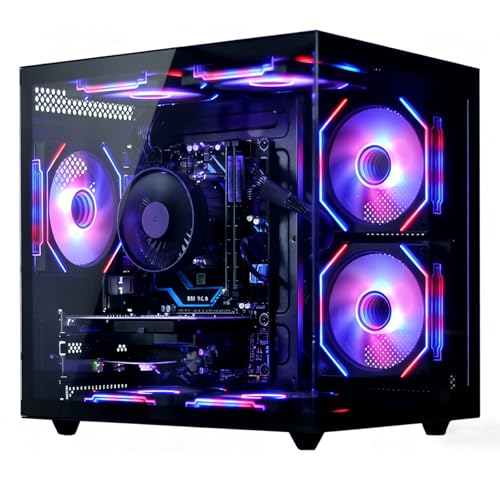
suevery SUT1B1-SUT1B9 Gaming PC
suevery Gaming desktop

suevery SUT1B1-SUT1B9 Gaming PC

(29)
$559.99
Dedicated GPU RGB Wi-Fi
ASUS ROG G700
ASUS Gaming desktop

ASUS ROG G700

(328)
$2,499.99
Dedicated GPU RGB Wi-Fi
Alienware Aurora ACT1250
Alienware Gaming desktop

Alienware Aurora ACT1250

(143)
$2,079.99
Dedicated GPU RGB Glass side panel
KAMRUI Pinova P2
KAMRUI Mini PC

KAMRUI Pinova P2

(1956)
$339.99
Wi-Fi Bluetooth Compact case
HP Pro 400 G9 Mini
HP Mini PC

HP Pro 400 G9 Mini

(98)
$529.99
Wi-Fi Bluetooth
MSI Codex Z2 A8NVP-436US
MSI Gaming desktop

MSI Codex Z2 A8NVP-436US

(215)
$2,095.41
Dedicated GPU RGB
Lenovo ThinkStation P3 Tower Gen 2
Lenovo Workstation desktop

Lenovo ThinkStation P3 Tower Gen 2

(25)
$6,499.00
Dedicated GPU Wi-Fi Bluetooth
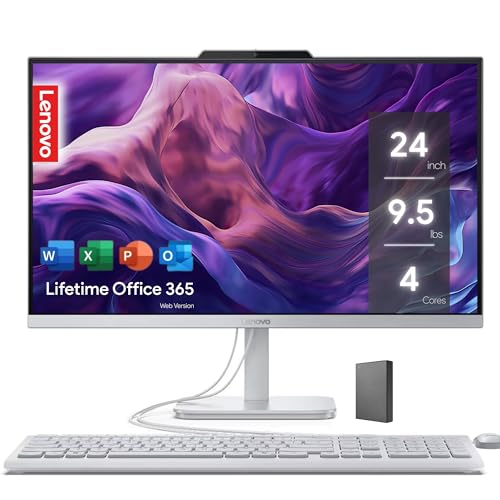
Lenovo IdeaCentre 24 All-in-One

Lenovo IdeaCentre 24 All-in-One

(70)
$499.99
Wi-Fi Bluetooth
Dell Tower Plus EBT2250
Dell Workstation desktop

Dell Tower Plus EBT2250

(1)
$2,799.99
Dedicated GPU Wi-Fi Bluetooth

Best brands for desktops

We compare 10 published desktops models across catalog depth, editorial score, user average on a 0-100 scale, average price and the axes where each maker stands out.

Models compared 10 models (6 brands)
Best user score ASUS (85/100)
Best editorial score Alienware (95/100)
Lowest average price HP ($745)

HP

2 models Lowest price
Configuration balance 75/100
Expandability 70/100
Sustained performance 69/100
76/100 Average score
72/100 Average users
Average price $745

136 reviews

View HP catalog

Alienware

1 model Best score Best for Configuration balance Best for Sustained performance
Configuration balance 98/100
Sustained performance 98/100
Noise and refinement 75/100
95/100 Average score
75/100 Average users
Average price $2,080

143 reviews

View Alienware catalog
1 model Best user rating Best for Chassis Best for Noise
Sustained performance 98/100
Configuration balance 97/100
Noise and refinement 87/100
95/100 Average score
85/100 Average users
Average price $2,500

328 reviews

View ASUS catalog
1 model Best for Expandability
Configuration balance 98/100
Sustained performance 98/100
Expandability 87/100
88/100 Average score
65/100 Average users
Average price $2,800

1 review

View Dell catalog
1 model
Configuration balance 98/100
Sustained performance 98/100
Expandability 80/100
88/100 Average score
68/100 Average users
Average price $6,499

25 reviews

View Lenovo catalog

MSI

1 model
Sustained performance 98/100
Configuration balance 90/100
Noise and refinement 77/100
88/100 Average score
77/100 Average users
Average price $2,095

215 reviews

View MSI catalog

Quick read

Alienware leads editorial average (95/100); ASUS stands out with users (85/100); HP has the lowest average price ($745).

Compare the best Desktops

Quick comparisons

Select 2 products to see the comparison in this section.

What to look for when choosing a desktop PC

Desktop PCs split into four clear routes: compact desk PCs, mainstream towers, gaming desktops, and workstations. The best choice is usually the most balanced full system for your use, not the one with the single flashiest CPU or GPU.

Use case Prioritize Avoid paying more for
Home Office Quiet operation, Fast startup, Wi-Fi and display outputs Oversized cases and gaming parts
Family Desktop Balanced CPU and RAM, Enough storage, Easy desk fit High-end graphics you will not use
PC Gaming GPU and CPU balance, Airflow, Sustained cooling A strong GPU in a weak case
Creative Work CPU and RAM headroom, Fast storage, Quiet under load RGB-focused builds with weak fundamentals
Small Desk Compact footprint, Front ports, Wireless basics Mini systems with no upgrade path if longevity matters

Home Office

Prioritize Quiet operation, Fast startup, Wi-Fi and display outputs
Avoid paying more for Oversized cases and gaming parts

Family Desktop

Prioritize Balanced CPU and RAM, Enough storage, Easy desk fit
Avoid paying more for High-end graphics you will not use

PC Gaming

Prioritize GPU and CPU balance, Airflow, Sustained cooling
Avoid paying more for A strong GPU in a weak case

Creative Work

Prioritize CPU and RAM headroom, Fast storage, Quiet under load
Avoid paying more for RGB-focused builds with weak fundamentals

Small Desk

Prioritize Compact footprint, Front ports, Wireless basics
Avoid paying more for Mini systems with no upgrade path if longevity matters
DECISION GUIDE

What actually matters most

System Balance

High

This matters for every buyer because a desktop feels right only when the CPU, GPU, RAM, and storage make sense together.

Airflow

High

It matters most if the PC will run games, rendering, or long work sessions where weak cooling can cut real performance.

Noise

Medium/High

This matters more in bedrooms, shared rooms, and home offices where fan noise becomes part of daily use.

Upgrade Room

Medium/High

It matters if you want the desktop to last longer through more storage, more RAM, or a future graphics upgrade.

Desk Fit

Medium

This matters when case size, front port access, and monitor connections affect where and how the PC can actually live.

Port Selection

Medium

It matters if you use multiple displays, wired accessories, Ethernet, or need an easy setup without extra adapters.

RGB Lighting

Low

This only matters if you care about the look on your desk, not if you are trying to buy the strongest overall system.

COMMON MISTAKES

Desktop PC buying mistakes to avoid

Buying One Headline Spec

A powerful processor or graphics card can be wasted by too little RAM, slow storage, weak cooling, or a cramped case.

Ignoring Airflow In Small Cases

Compact desktops can look neat on a desk but still run hotter, louder, and slower during long sessions.

Overbuying For Basic Work

For browsing, study, and office tasks, spending heavily on gaming hardware usually adds heat, noise, and cost more than useful speed.

Assuming Every Desktop Upgrades Easily

Some systems have limited power headroom, tight internal space, or poor access, which makes future upgrades unrealistic.

Skipping Port And Display Checks

Missing monitor outputs, weak wireless support, or awkward front and rear ports can create setup friction on day one.

Treating Noise As A Minor Detail

A desktop that is technically fast but constantly loud can be the wrong pick for work, study, or shared-space use.

How we review this category

A desktop PC should be evaluated as a complete system: configuration balance, sustained performance, airflow, noise, expandability, and desk fit matter more than a single headline spec.

In Desktop PCs, the verdict shifts most around Configuration balance, Chassis and airflow, Sustained performance and Noise and refinement.

What we review in this category

For desktop PCs we review documented evidence around configuration balance, airflow, sustained performance, noise, refinement, expandability, price, and user feedback when useful.

Configuration balance

Weight 30%. A desktop should be judged as a complete build, so CPU, GPU, RAM, storage, and platform balance matter more than a single headline component.

See technical evidence we review

Technical measures

  • CPU, GPU, RAM, storage, motherboard/platform, PSU, cooling, OS, and included peripherals when relevant.
  • Gaming, office, creator, mini PC, and workstation routes.

Reading context

  • A desktop is read as a balanced system, not a pile of headline parts.
  • GPU, CPU, RAM, storage, and PSU need to make sense together.

Common cautions

  • Large RAM or storage does not compensate for a weak CPU/GPU platform.
  • Unknown PSU or motherboard details limit confidence.

Chassis and airflow

Weight 18%. Case design, cooling path, and internal space decide whether the listed parts can make sense under sustained use rather than just inside a marketing thumbnail.

See technical evidence we review

Technical measures

  • Case size, airflow path, fan count, CPU cooler, GPU clearance, dust filters, vents, and front-panel layout.
  • Thermal fit for the declared workload and room placement.

Reading context

  • Chassis quality decides whether the configuration can breathe and stay serviceable.
  • Mini PCs, towers, and gaming cases have different airflow expectations.

Common cautions

  • Glass-heavy or compact designs need cooling evidence.
  • A strong GPU in a weak case is treated cautiously.

Sustained performance

Weight 24%. Desktop buyers often pay for long sessions, so the verdict should reflect credible sustained load fit rather than a parts list viewed in isolation.

See technical evidence we review

Technical measures

  • CPU/GPU tier, power limits, cooling type, memory configuration, SSD type, and workload route.
  • Gaming, rendering, AI/light creator, office, and always-on use contexts.

Reading context

  • Sustained performance depends on thermals and power delivery, not only component names.
  • Dedicated GPU class and cooling matter for gaming/creator routes.

Common cautions

  • Benchmark-like claims need platform and cooling context.
  • Thin mini PCs and budget towers can throttle or become noisy under load.

Noise and refinement

Weight 12%. Fan noise, desk presence, and general refinement change the experience sharply for home, office, and shared-space setups.

See technical evidence we review

Technical measures

  • Fan count, cooler type, acoustic claims, idle/load behavior, coil-whine reports, dust management, and build refinement.
  • Living room, office desk, bedroom, and studio contexts.

Reading context

  • Noise matters differently for gaming towers, office PCs, and media/living-room desktops.
  • Refinement is read from cooling, build, and maintenance signals together.

Common cautions

  • Silent wording without fan/cooling context is weak.
  • High airflow can bring higher noise if not managed.

Expandability

Weight 16%. Upgrade room matters because desktops compete partly on lifespan, repairability, and how easily the buyer can grow the system later.

See technical evidence we review

Technical measures

  • RAM slots, M.2/SATA bays, PCIe slots, PSU headroom, motherboard form factor, rear/front I/O, and warranty access.
  • Upgrade path for GPU, storage, memory, networking, and peripherals.

Reading context

  • A desktop has extra value when upgrades are realistic and not blocked by proprietary parts.
  • Mini PCs trade expandability for size and simplicity.

Common cautions

  • Proprietary PSU/case/motherboard designs limit upgrade value.
  • Warranty seals or unclear internals reduce confidence.

Editorial judgement still leaves room for incomplete documentation, weak claims, or practical friction that a spec table does not fully capture.

Which buyer routes change the verdict

We do not score every option through one fixed lens: Compact desk PC, Mainstream tower, Gaming desktop and Workstation desktop change the priorities, so a strong recommendation for one route can be the wrong fit for another.

Signals that separate strong picks from weak ones

We pay close attention to the visible signals that usually decide the shortlist: Processor, Graphics, RAM, Storage and Form factor.

  • Configuration balance: A desktop should be judged as a complete build, so CPU, GPU, RAM, storage, and platform balance matter more than a single headline component.. cpu gpu balance, ram and storage mix, buyer route fit and wasted or missing headroom
  • Chassis and airflow: Case design, cooling path, and internal space decide whether the listed parts can make sense under sustained use rather than just inside a marketing thumbnail.. case size, airflow or fan layout, cooling clues and component realism
  • Sustained performance: Desktop buyers often pay for long sessions, so the verdict should reflect credible sustained load fit rather than a parts list viewed in isolation.. workload route, cooling support, gpu or cpu ceiling and session-to-session credibility
  • Noise and refinement: Fan noise, desk presence, and general refinement change the experience sharply for home, office, and shared-space setups.. noise signals, desk placement fit, rgb or case priorities and home office practicality
  • Unclear evidence for the main desktop PC buying route.

The usage scenes we keep in view

We read this category through practical usage scenes such as Desk startup, Gaming or heavy load, Desk noise and Upgrade path. That context shift stops unlike products from being treated as if they solved the same problem.

How to use this page

Use the category listing to narrow the field, then open the reviews that match your route, budget, and setup constraints. A good shortlist here is not the one with the most headline specs, but the one whose trade-offs fit the way the product will actually be used.